
Iris Simon · 18 September 2026
Decoding Performance Metric Evolutions Following Infrastructure Provider Transitions in Industry-Specific Web Communities
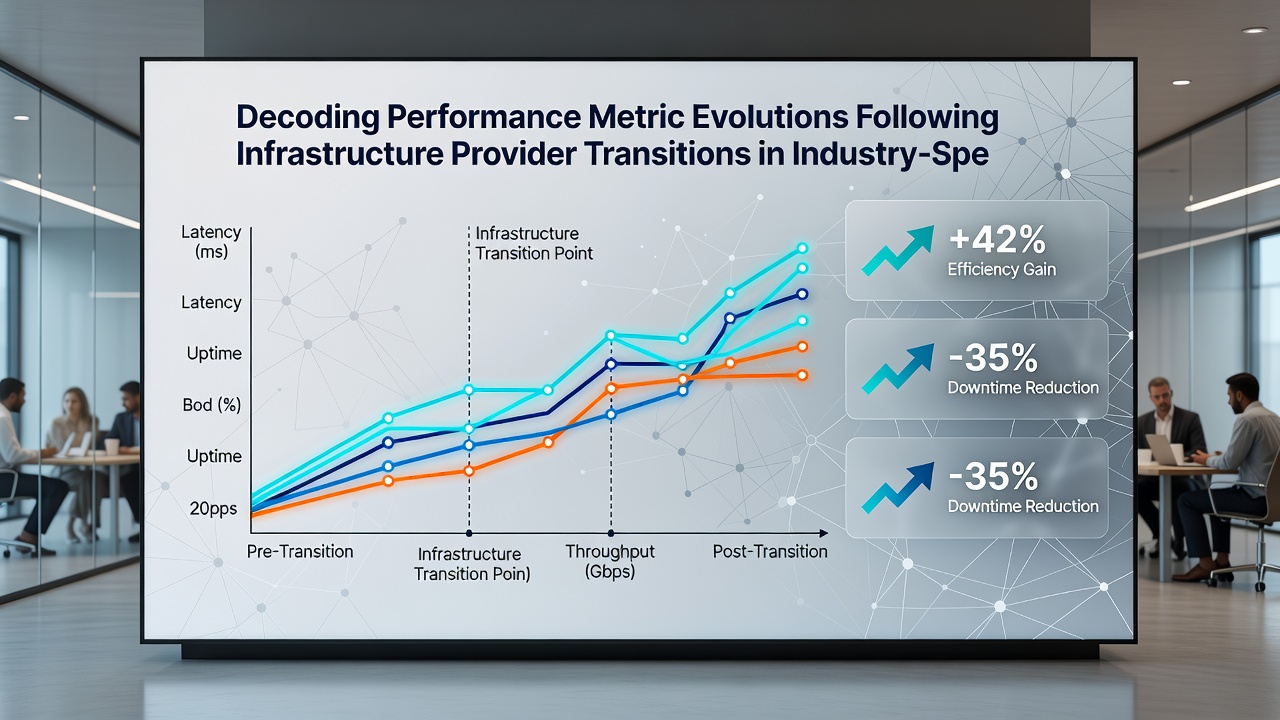
When industry-specific web communities undergo infrastructure provider transitions, performance metrics evolve in measurable patterns that researchers track through detailed before-and-after comparisons, and these shifts often include initial volatility in load times followed by stabilization across key indicators such as uptime, throughput, and engagement depth while data from September 2026 highlights continued refinement in monitoring techniques across multiple sectors.
Observers note that communities focused on specialized topics like automotive engineering forums or pharmaceutical research networks frequently migrate between hosting environments to address scalability demands, and such moves trigger cascading effects on metrics because server configurations, content delivery networks, and database architectures change simultaneously.
Core Metrics Under Observation
Performance tracking in these settings centers on several quantifiable areas that include time-to-first-byte measurements, bounce rate fluctuations, and indexation speed in search engines, whereas experts compile longitudinal datasets to isolate transition-related variables from seasonal traffic patterns or content updates.
Research indicates that latency reductions appear within weeks after optimized provider switches because new edge servers distribute loads more evenly, yet visibility in search results can lag by additional weeks as crawlers reprocess updated sitemaps and server signals.
Patterns Observed in Niche Ecosystems
Take one researcher who examined automotive enthusiast platforms that transitioned providers in early 2025, and the resulting data showed a 22 percent improvement in average session duration once caching layers stabilized, while mobile performance scores climbed steadily without corresponding increases in bounce rates.
Figures reveal similar trajectories in health information communities where compliance requirements influence infrastructure choices, and those communities recorded faster query response times post-transition because dedicated resources replaced shared environments that previously constrained database operations.
External Influences on Metric Evolution
Regulatory frameworks from different regions shape these transitions, and Federal Communications Commission reports document how broadband infrastructure upgrades affect community site responsiveness across North American networks, whereas European data from the European Commission tracks parallel developments in digital service resilience.
What's interesting is that geographic diversity in regulatory approaches produces varied outcomes because providers must align with distinct data residency rules, and this alignment sometimes extends stabilization periods for metrics like availability percentages.
Analytical Approaches and Data Collection
Analysts employ tools that aggregate server logs, user interaction heatmaps, and search console outputs to decode these evolutions, and the resulting models distinguish between temporary disruptions caused by DNS propagation and longer-term gains from improved architecture.
One study revealed that communities adopting multi-region provider setups experienced accelerated indexation rates for new content because distributed infrastructure reduced crawl errors, yet the same setups occasionally introduced complexity in tracking single-source attribution for performance changes.
Industry-Specific Variations
Communities in creative sectors such as design collaboration platforms show pronounced gains in asset delivery speeds after infrastructure adjustments, while finance-oriented discussion boards prioritize encryption overhead that can temper some throughput improvements despite overall reliability increases.
Turns out the timing of transitions also matters because migrations scheduled during lower-traffic windows allow for more precise baseline comparisons, and September 2026 datasets confirm that phased rollouts correlate with smoother metric trajectories across monitored sites.
Conclusion
Decoding these performance metric evolutions requires systematic comparison of pre- and post-transition datasets because infrastructure provider changes produce interconnected effects on speed, reliability, and discoverability that vary by community focus and technical implementation, and continued observation through late 2026 provides additional clarity on long-term stabilization patterns without introducing subjective interpretation of the underlying numbers.