Mara Krüger · 2 October 2026
Spotting Recovery Patterns in Niche Web Communities After Domain Ownership Handovers
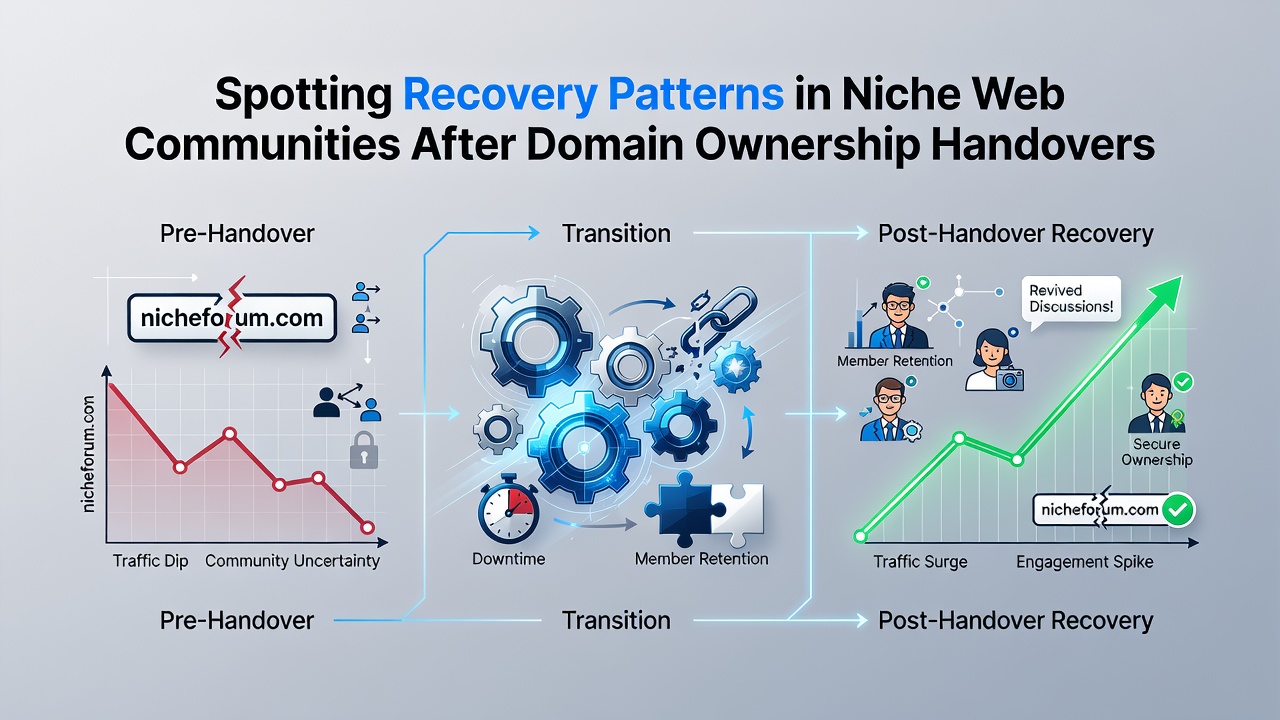
Domain ownership handovers trigger measurable shifts in visibility and engagement across specialized online spaces, and researchers track these changes through consistent data points collected over extended periods. When a domain transfers between registrars or owners, crawl frequency from major search engines often drops initially before stabilizing, while community metrics such as session duration and return visits follow separate timelines that observers can map against historical benchmarks.
Initial Disruptions After Transfer
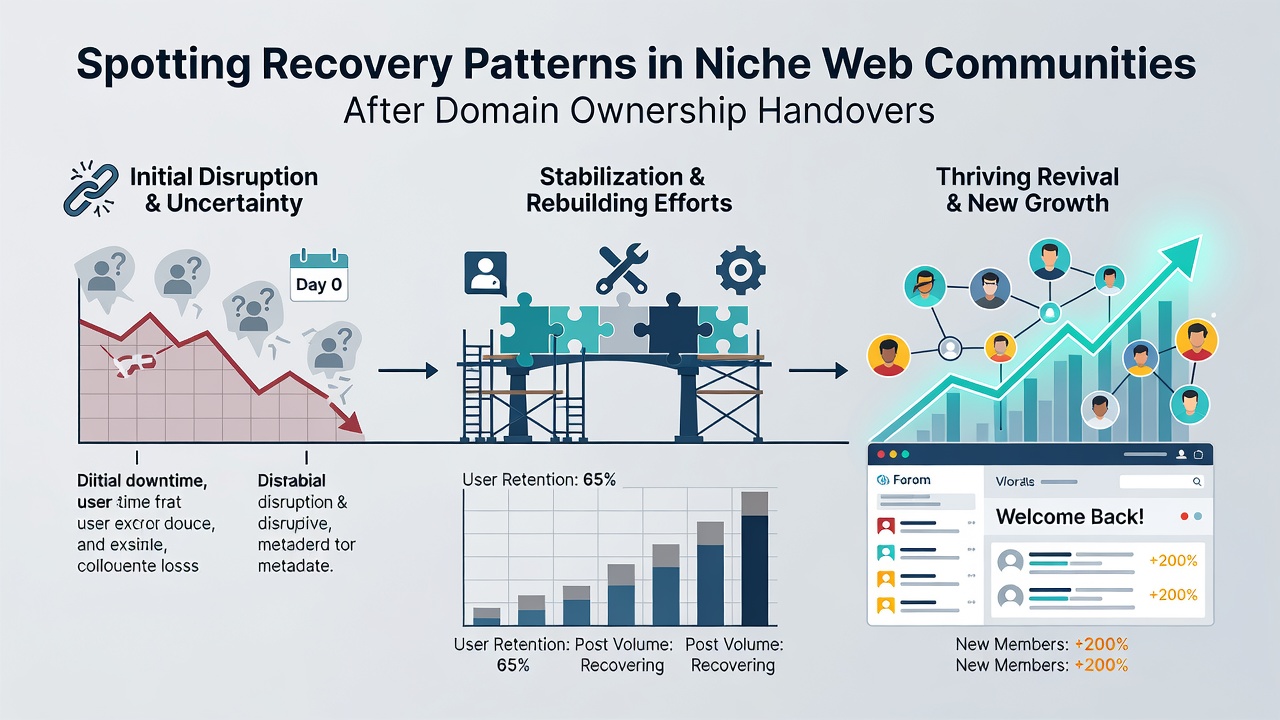
Ownership changes frequently coincide with temporary indexing gaps because new registrar configurations require propagation across DNS records and certificate authorities, and studies from multiple regions document recovery windows ranging from fourteen to forty-five days depending on the scale of the community involved. Data collected during 2025 and into October 2026 shows that niche forums centered on technical hobbies or regional interests experience sharper initial declines in organic referrals compared with broader consumer sites, yet those same communities demonstrate faster rebound rates once DNS propagation completes and backlink signals reassert themselves in search algorithms.
Key Indicators of Stabilization
Analysts monitor several parallel signals to determine when a handover has moved past its volatile phase, including rising crawl budget allocation from search engine bots, restoration of historical ranking positions for core keyword clusters, and renewed growth in direct traffic sources that bypass search entirely. One longitudinal review conducted by academic teams at institutions across North America and Europe found that communities displaying at least a twenty percent increase in indexed pages within eight weeks of the transfer date were statistically more likely to regain pre-handover engagement levels by the six-month mark.
Backlink profiles also provide reliable clues because new ownership sometimes prompts link rot on older referring domains, while fresh citations from active participants within the niche accelerate reindexation. Observers note that successful recoveries correlate strongly with consistent content updates posted during the first quarter after the change, as these updates encourage search engines to recrawl the site more aggressively and reestablish topical authority signals.
Regional Variations in Recovery Timelines
Patterns differ by geography because regulatory environments and internet infrastructure quality affect how quickly DNS changes propagate and how search engines prioritize regional content. Reports compiled by agencies in Canada and Australia indicate that communities hosted on infrastructure with stronger local peering arrangements recover indexed page counts faster than those relying on distant registrars, while data from the European Union highlights the role of privacy regulations in shaping user retention after ownership shifts. In October 2026, aggregated figures revealed that technical hobbyist forums in the Asia-Pacific region posted the shortest average recovery periods, often under thirty days, whereas similar communities in Latin America required closer to sixty days before engagement metrics stabilized.
Monitoring Techniques Used by Analysts
Specialized tools track both quantitative and qualitative markers, ranging from server log analysis that reveals bot activity spikes to sentiment tracking across affiliated social channels that signals returning user loyalty. Researchers at various universities have published methodologies that combine these datasets into composite recovery scores, allowing community managers to compare their trajectory against anonymized benchmarks drawn from similar niches. External references such as ICANN registration data reports supply additional context on transfer volumes that help situate individual community performance within broader industry trends.
Another useful external source comes from Statistics Canada digital economy publications, which document infrastructure influences on online community persistence after technical transitions. These datasets allow observers to isolate variables such as registrar reputation and certificate renewal timing that frequently correlate with smoother recoveries.
Conclusion
Recovery patterns in niche web communities after domain ownership handovers follow identifiable sequences when tracked through crawl data, engagement metrics, and regional infrastructure factors. Consistent monitoring of these indicators enables accurate forecasting of stabilization timelines, and the evidence accumulated through 2026 demonstrates that communities applying structured observation methods regain visibility and participation levels more predictably than those relying on anecdotal assessment alone.